World’s Longest Train Rides: Trans Siberian vs. Indian Pacific

In case you were wondering whether the earth swallowed me last fall due to the radio silence on the blog, it kind of did: I spent much of September and October on the train crossing Russia, Mongolia and China. (See, I do get away from beach destinations sometimes!)

I had been planning on riding the Trans-Siberian railroad for years, as I’m a big fan of long train journeys. Yet for some reason I never got around to it before 2012. But it’s good that I didn’t – now I was able do the trip with my dad, who retired from the Finnish army a couple of years ago at the age of 50, and thus is a young senior citizen with plenty of free time. What better place to head for a family trip than Siberia!?

1 (640x480) (2)

So after I spent a fun summer in Finland, my dad and I set off for the 3.5-week train journey into dark Siberia (which, funnily enough, ended up being bright and sunny the whole time). And just FYI: Most of this time was spent seeing sights and visiting towns along the way, not just sitting on the train. The actual travel time from Helsinki to Beijing was about a week.

DSC04876 (640x480)

After successfully completing the famous ride, I wrote an article for the Finnish newspaper Helsingin Sanomat, comparing the Trans-Siberian with another long train trip I’ve got under my belt, the Indian Pacific of Australia. (And yes, I know that by veering off to Mongolia after Ulan-Ude we actually took the Trans-Mongolian route for half of the trip, but for the purposes of the article, I focused on the Trans-Siberian part of the journey.)

The article turned out to be quite popular based on the feedback I heard, so I thought I’d do an English translation of it for you. So here we go:

The World’s Longest Train Rides

Which marathon train trip suits you better, the tundra-crossing Trans-Siberian or the Indian Pacific zooming by the desert? HS put the trips to the test.

7 (640x480)

??????????????

The Trans-Siberian railway from Moscow to Vladivostok is 9, 259 kilometers long. The trip takes about 150 hours, or more than six days.

History: Building a railroad crossing Russia took 25 years. The constructions were completed in 1904, and involved 90 000 people. The majority were inmates and soldiers sentenced into manual labor.

The main attractions: The city of Nizhny Novgorod that was closed off from foreigners during the Soviet era, where the Volga River can be crossed with a cable car, the Perm region with its 10,000-year-old permafrost ice caves, the world’s deepest lake Baikal, Irkutsk with its wooden mansions and the Buryatian Republic‘s capital city Ulan-Ude.
DSC06145 (640x480)


DSC05918 (480x640)The atmosphere: The train rattles steadily along the tracks. The tobacco smoke floating into the carriage adds to the sleepy atmosphere. A young man pours hot water into his ready-made mashed potatoes, a grandpa takes secret sips from his spiced-up Sprite bottle in between card games. In roadside towns, older grannies with headscarves sell greasy pelmenis. The nights go by while listening to the snores of your carriage mates, and wondering what the sudden stops are all about.

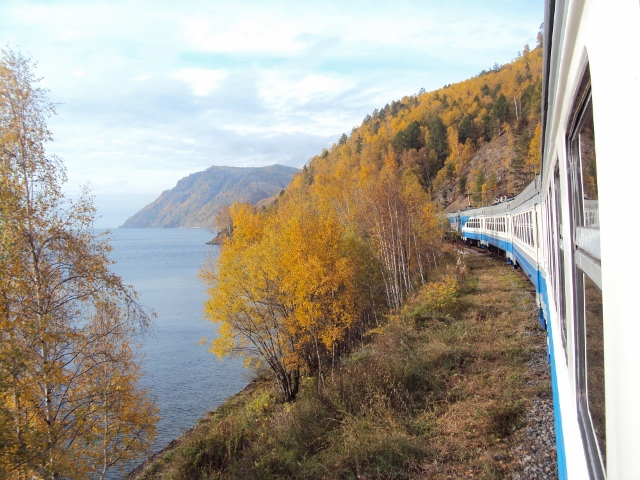
Scenery: The landscape consists of Siberian birch forests, low hills, pine trees of the taiga and snow-capped mountains in the East. Pastel-colored houses and slowly crumbling old villages dot the way.
DSC05754 (640x480)

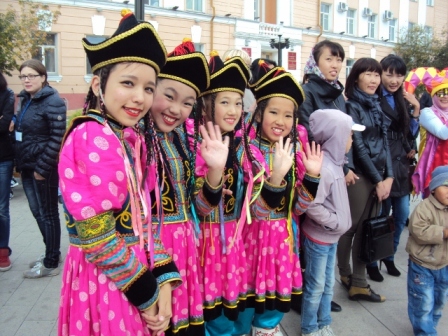
Travel companions: Despite the Trans-Siberian’s great international popularity, the majority of the passengers are Russians: retired couples, families returning from visiting relatives, army boys and sports teams on trips. Every now and then you can hear some conversations in the Buryat language, spoken by the Buryat people who are descendants of Mongolians. Of the foreigners, most are Chinese and European.

DSC05055L (480x640)

Price: For the 54-bed open carriage (platskarny), a one-way ticket costs about 200 euros. First and second class four-person cabins cost 400-1,000 euro per person, depending on the train. Tickets can be bought either in Finland or for slightly cheaper in the Russian railway stations.

Facilities: The first-class cabins have showers, other passengers have to make do with shared toilets. The dining car’s golden décor reminds you of the grandeur of days gone by with its silk table cloths and curtains. Beer and vodka flow freely, and chatter is accompanied by borscht soup.

DSC05063 (640x480)

Please note: The term “Trans-Siberian” refers to the train track crossing Russia, not to any particular “Trans-Siberian train.” Rossija and Baikal are some of the better-quality trains that serve the route, as well as the new British luxury train Golden Eagle Trans-Siberian Express. There are also local trains traveling between different Siberian towns. One option is to get off the train in the morning in a town of your choosing and to continue the journey in the evening with another train. In doing so, the tickets need to be bought separately for each leg of the journey. Pay attention to the departure times: Russian railways always operate in Moscow-time, no matter what the local time in your Siberian destination may be.

The Indian-Pacific travels from Sydney to Perth. The 4 352-kilometer train journey takes 65 hours, or three days.

??????????????

History: The railroad that crosses Australia, connecting the Pacific and Indian Oceans, was opened in 1970. It includes the world’s longest straight piece of track, the 478-kilometer Nullarbor Plain.

The main attractions: Australia’s oldest mining town Broken Hill, the city of 700 churches known as Adelaide, Kalgoorlie with 100 years’ worth of gold fever history, Nullarbor Plain, the ghost village of Cook with its four residents and millions of flies, the beaches of Perth.
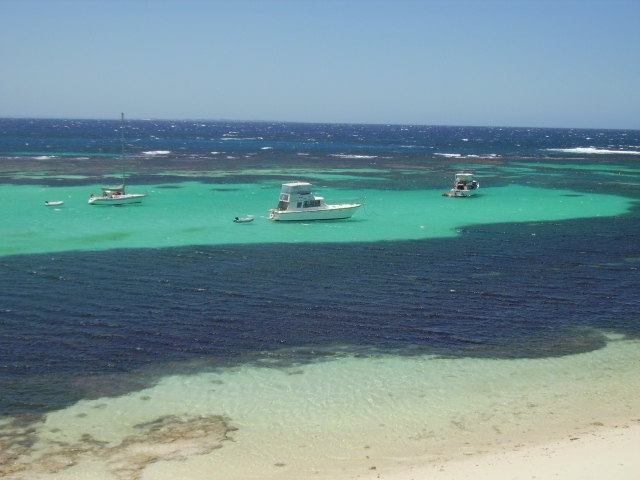
DIGITAL CAMERA

Atmosphere: The 700-meter row of metal wagons rummages through the desert, past the occasional kangaroo, emu, herds of camels and two-meter wedge-tailed eagles. Happy chatter fills the restaurant car as the chicken curry dishes are scarfed down from the tables seating four people. The atmosphere is communal. The vast emptiness behind the windows is highlighted as the radio blasts bits of Slim Dusty’s perky song every couple of hours: “The Indian Pacific spans the land!” One can’t help but join in on the tune. A train trip doesn’t get more Australian than this.
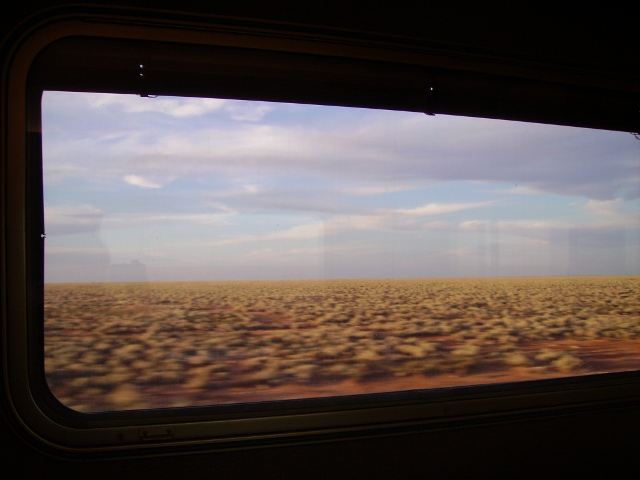
DIGITAL CAMERA

Scenery: The majority of the three-day trip is characterized by typical Australian landscape – red sandy desert, scrubs, bright orange sunsets and sunrises. Upon leaving Sydney you’ll see the bluish spruce-covered Blue Mountains, after Adelaide the shallow reddish mountains and on arrival to Perth, the lush Avon Valley.

????????????

Travel companions: Adventure-loving Australian retirees, locals moving across the country, European and North American backpackers and train travel enthusiasts.

Price: In the Gold Kangaroo section, a one-way trip in a luxury cabin with full board costs about 1,760 euro and in the Red Kangaroo section the same goes for 1,200 euros. Occasionally there will be platinum-level suites with a double bed on offer, costing 5,000 per person. Budget travelers have to settle for a reclining seat, best accessed by accruing a Rail Explorer pass. For about 360 euro you can ride Australian trains for three months.

Facilities: The Gold Kangaroo cabins feature bunk beds, combined toilet-shower stalls and large windows, and some come with a TV and minibar. Once the train has left the station, the Rail Explorer pass holders have the opportunity to purchase a Red Kangaroo cabin for 120 euro, provided there is enough room. Different travel classes have their own restaurant and lounge cars.

Please note: The stopovers are a few hours long. Guided city tours are sold for about 20 euro.

??????????????

So that’s it! Have any of you taken the Trans-Siberian and/or the Indian Pacific? Any thoughts on which one is the best marathon train journey? 🙂 

Five reasons to skip Christmas (every now and then)

Hope everyone had a merry Christmas, Hanukah, Kwanzaa, Festivus and whatnot last month! However it was you spent those leisurely days between Dec. 24 and New Year’s Eve, I trust you had a jolly time.

TokyoTwr

Though I’m in the habit of celebrating Christmas, as is typical in my native Finland, this was my “skip-year,” so I did not do much. Instead of being huddled over a mountain of presents or munching on delicious holiday food, I chilled out in New York and spent those December days much like any others in the city: working, catching up with friends, eating in Thai restaurants, going to the gym, etc.

This might sound sad to you if you are a Christmas fanatic, but don’t worry. For me it’s not at all. You see, over the past decade I’ve crafted my own tradition of forgoing traditional family Christmas celebrations every second year for practical reasons (mostly for saving money and time).

Sure, I do miss my family and it would be great to spend time with them during the holidays, but aside from that, skipping the hustle and bustle of Christmas is really not all that bad. In fact, it’s kind of refreshing.

Some of my skip-year Christmases have been quite memorable, like  2008 when I flew to Cancun, Mexico and danced around the bar with a group of Mexican holidaymakers singing “Feliz Navidad.” Or 2006, when my friends and I toured the vineyards around the Margaret River region of Western Australia. (A white Christmas has a strong contender in my mind – a sunny one! Aussies may be onto something…)

DIGITAL CAMERA

Being someone who loves change and variety, it’s nice for me to spice things up every other year and do something different from the usual “family dinner – Christmas sauna – presents – church” –routine, as warm and comforting as that can be. This year I attended a Panamanian Christmas fiesta in Brooklyn, where we danced Bachata and Merengue until midnight.

So believe it or not, there are plenty of good reasons to follow my lead on this tradition of skipping the holidays every other year (or at least celebrating them super low-key), many of them travel-related.

DIGITAL CAMERA

Here are some of the biggest benefits:

1) Avoiding expensive flights

Flying to most places in the world between Dec. 18 and early January is prohibitively expensive. A round-trip ticket from the US to Europe or vice versa can easily set you back $1,000-1,300 this time of the year, when you can find flights in non-peak months for $500-700. So why not postpone that trip home by a couple of weeks and save a small fortune in the process? As most festive dates are artificial anyway, who is to say you cannot celebrate Christmas in January, should you feel like it? Or even in the summer! (Well hey, some scientists say Jesus was born on June 17.)

2) Scoring cheap flights

While prices for flights are generally sky-high in the end of December, there are two dates when you might score a deal: Dec. 25 and Dec. 31. Yep, Christmas Day and New Year’s Eve. That’s because most people wouldn’t dream of flying anywhere on these days, preferring to celebrate on the ground. But during my skip-years, I am more than happy to fly whenever, if it saves me hundreds of dollars. This New Year’s Eve I flew from New York to Costa Rica for a mere $195 with Spirit (and still made it to San Jose in time for the party!), while the fare was $100-300 more on the days preceding Dec. 31. You can’t beat that!

IMG_0616

(Our NYE party crew in San Jose – matching checkered shirts provided by our friendly host Luis, second from the right.)

3) No presents – no holiday stress

We all know the feeling: the holidays are just around the corner and we have yet to buy a single present, clean the house from top to bottom, bake cookies and plan a fancy dinner for family and friends. And why is it that the days leading up to Dec. 24 always zoom by so quick?! Streeeessssss!!!

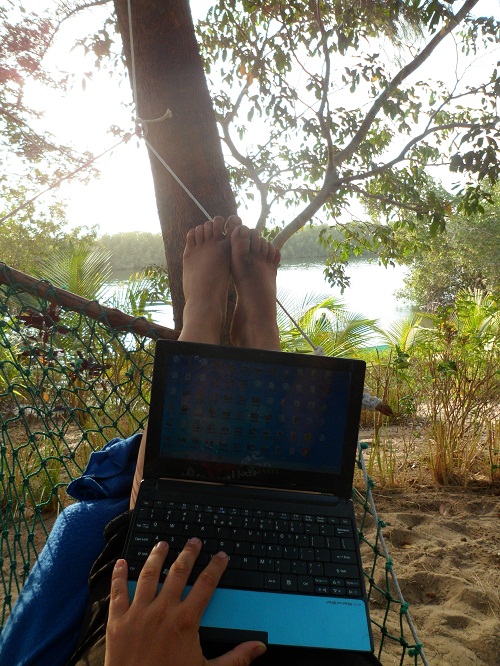
– Well, not for me this year! I didn’t need to care how fast Christmas was approaching as I didn’t have a single thing to prepare (aside from picking up a bottle of wine for the Panamanian fiesta). I didn’t buy any presents and I told my family not to get me anything either. I didn’t even send out a single Christmas card. I did put up a holiday greeting on Facebook, but that’s about it. 😉 While everyone else was freaking out about getting things done on time, I couldn’t have been more relaxed the closer we got THE day. Plus I was able to use my Christmas-time savings towards that Central American holiday (I’m typing this on the beach as we speak… yes, I have a beach problem)!

4) Avoiding holiday weight-gain

I know how some of you are feeling right about now – looking at the newly-formed flab on your belly, you’re thinking “did I have to eat that extra box of chocolates during Christmas?” Well, don’t feel bad – you had to. That’s the spirit of Christmas. I’ve been there a million times too, but luckily I’m not there this year. By skipping Xmas I not only steered clear from fattening traditional foods and goodies, I was also able to spend some extra time working out (plus the gym was nice and empty during the holidays)! So now I’m having a much better time touring Central America without extra pounds holding me down. 🙂
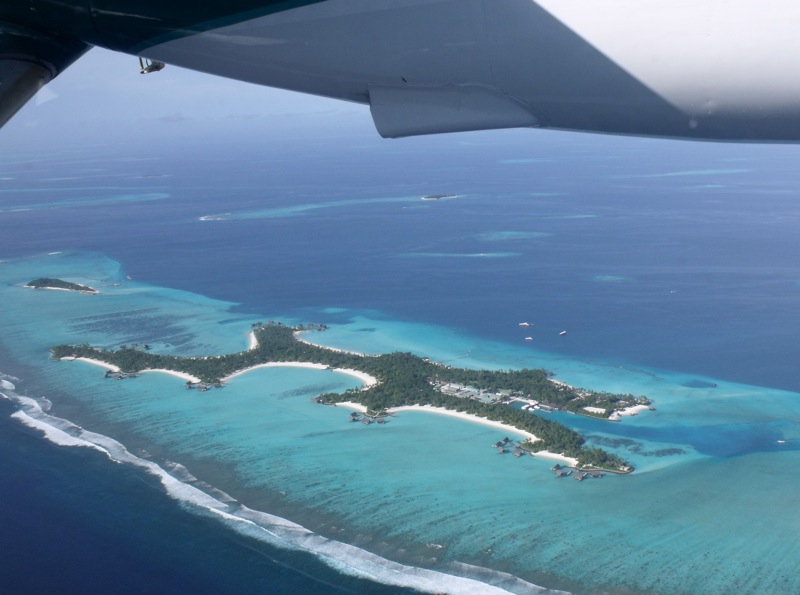
5) Bringing that special holiday feeling back

Remember the days when Christmas was something you looked forward to with joy, not dread? Back when you felt like the holidays couldn’t get here fast enough? Yeah, for most people this excitement has been long ago replaced by feelings of panic as December seems to roll around quicker each year (wasn’t in just Christmas 2011?). Thus my solution is the best: when you skip the festivities every other year, Christmas retrieves its role as a truly special occasion – one that only takes place every 24 months, just often enough for you to start missing it. And during your skip-years you can spend the time and money to travel to that dream destination of yours!

What do you think about my “skip-year” habit? Have any of your tried skipping Christmas  or embraced a low-key version of the holiday? Why or why not?

Fancy a timeout in the Sahara?

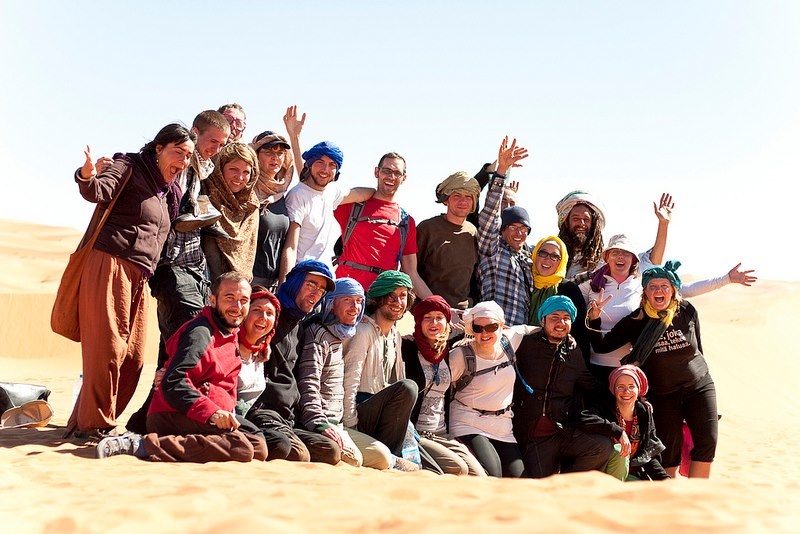
Guys, it’s that time of the year again – the time to sign up for the Road Junky Sahara Retreat in the Sahara Desert in Morocco! If you could only do one cool thing in your life, this one would be a pretty strong contender if you ask me.

As you may remember, this past February I was one of the 24 lucky ducks who managed to take a week off from the modern world and surround themselves with nothing but sand, dunes and bypassing camels.

And what a week it was, as you may have read from my post back in March. The next retreat will take place sooner than you think, from Jan. 27 – Feb. 2, 2013, so jot down the dates in your calendar and dust off those dune shoes (just kidding, there’s no need for that – it’s much easier to walk up and down slippery sand slides without shoes!).

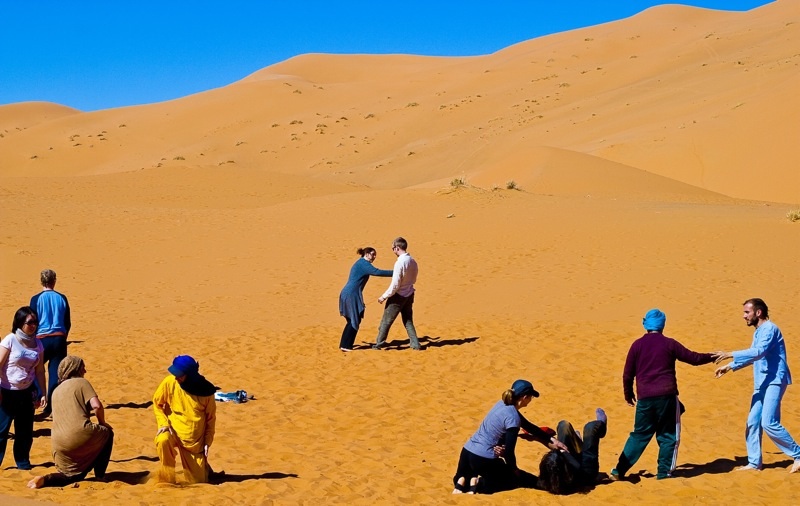
So what can you expect to get in return for you 295 euro attendance fee? In a nutshell: unreal desert scenery, interesting classes such as yoga and aikido, simple but tasty local food, accommodation in shared Berber-style tents, travel stories shared under the full moon by the bonfire and lots of new friends. Most people come to the retreat by themselves, so don’t be afraid to do the same.

Transportation to the meet-up spot in Merzouga is not included though, so you’ll need to find your own way to Morocco (I flew with the superb low-fares airline Norwegian Air but you could also check out Ryanair. In February their flight from London to Morocco was 25 euro – you can’t beat that). Most Sahara Retreat participants fly to Marrakech, and embark on the 10-hour bus ride to Merzouga together as a group the day before the camp starts.

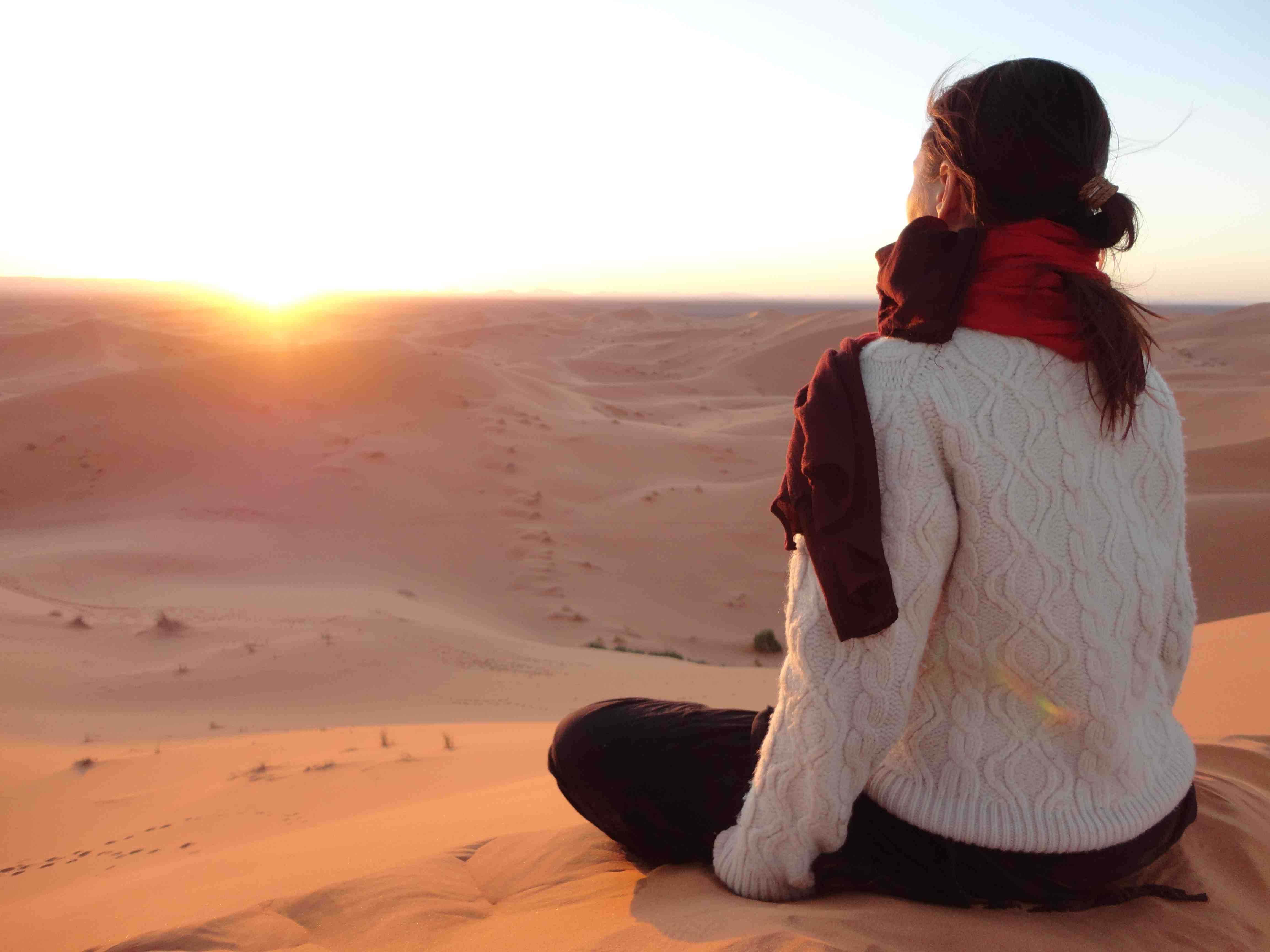
And what exactly goes on during the week? Nothing much and a whole lot at the same time. Quoting myself, “unexpected things will happen if you bring 24 people to the Sahara Desert. An anti-American hippie will befriend a clean-cut Midwestern guy, a vegetarian will succumb to the smell of delicious chicken tajine and a reserved German will throw himself in the middle of a cuddle puddle of entangled human bodies. Unlikely friendships will form, long-overdue tears come running out at the sight of the most beautiful sunset and strangers will care for each other as if they were family.”

“Overall the retreat was great fun and definitely helped me empty my mind of daily worries for a bit. Some of the things others mentioned enjoying were the friendships, sunsets, losing track of time in the desert, workshops, feeling the connection to the earth, sensing love and peace, seeing the moon rise out of the horizon and finding new energy for the future. All very hippie-sounding, but I guess that’s not such a bad thing after all.”

If you have questions about the retreat, feel free to ask me! Or check if your concerns were already answered here, such as these very crucial questions:

Will there be broadband internet connectivity? Can I get a banana milkshake in the shade? What if the guides belong to Al-Qaeda?

(Answer: The Road Junky Retreat is probably not for you.)

(Photos courtesy of various members of our Sahara group. Thank you for all the fun times!)

PS. If you think you might want to go but are not sure yet, don’t worry. Last time I signed up about two weeks before the starting date and that was fine! But of course if you want a spot for sure, you might want to get cracking on this one.

Playing tour guide in Helsinki

Sorry for the blog hiatus, guys… I’m still here, still on the move! I’m currently in New York, after a whirlwind train tour of Russia, Mongolia and China and a 4-day pit stop in South Korea.

But before I get into the train trip (which I did with my dad!), let me tell you about this past summer that I spent in my native country of Finland. I was back in the Arctic North for 2.5 months, which is just enough time to catch up with friends and family in different parts of the country, attend a rock festival, travel to an island or two, get sweaty in countless saunas by the lake, party it up during the summer’s white nights, pick some mushrooms in the forest and eat all the Finnish foods and treats I’ve missed.

This summer I also ended up playing tour guide in Helsinki on four occasions to my North American friends. Most were visiting just for a day onboard one of the big cruise lines, so I got to be quite an expert in showing what the capital of FUN-land is all about in a matter of hours.

Thus I thought I’d share some of my tips with you guys in case you are ever headed to Northern Europe. So here are some of my favorite places to take my visitors in Helsinki:

The Helsinki Cathedral

-This one is a given. It’s the best-known landmark of the city, smack in the middle of Senate Square and near the Market Square where you can find overpriced souvenirs, tasty berries and sweet peas, and salmon sandwiches.

The fancy neighborhoods of Eira and Ullanlinna – the “Upper East Side” of Helsinki (in New York terms)

-Tram 3T is known as the “tourist tram” in Helsinki as it goes past some of the most important sights and the nicest neighborhoods. With my visitors we’d get off at Tehtaankatu and walk around the many picturesque streets in the area, such as Huvilakatu.

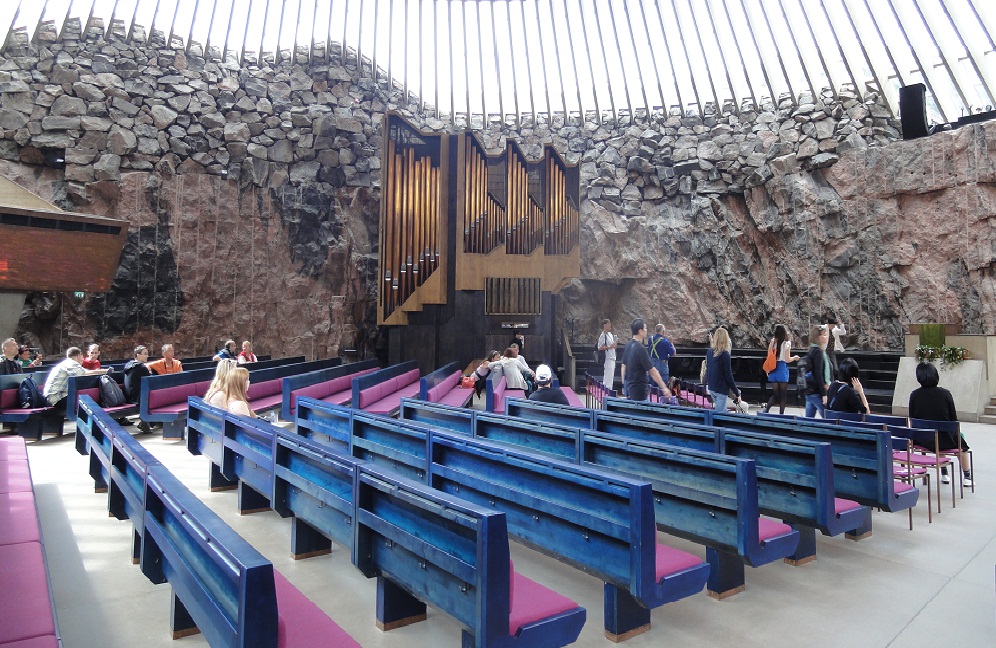
Temppeliaukio Church (i.e. The Rock Church)

-It’s a church built inside a piece of granite rock and always teaming with tourists. Many Finns don’t think it’s anything spectacular but foreigners seem to love it, including my visitors. I do think it’s pretty cool too. The church was built in 1969 by Finnish brothers Timo and Tuomo Suomalainen (whose last name, randomly, translates to “Finn”).

The rough and ready Kallio – The “Lower East Side” of Helsinki

-Kallio is a working class neighborhood dotted with Thai “massage” parlors, cheap pubs and subsidized government housing projects. Years ago I even spotted a sign that said “Mirva’s Erotic Show” –  Haha! It’s not often I see my name spelled anywhere, let alone in this context. But as has happened with the Lower East Side in NYC, Kallio (“The Rock”) has also undergone bouts of gentrification and is now home to tons of trendy restaurants and bars, vintage shops and artists and students. It’s because of this eclectic mix that it’s one of my favorite neighborhoods in Helsinki – and the cheap beer doesn’t hurt either!

Punavuori – The “Williamsburg” of Helsinki

-Hipsters are everywhere in Helsinki these days but they are particularly plentiful in the Punavuori district of the city. Earlier in the summer two American girls opened a coffee spot there called Brooklyn Café, which makes the area resemble its New York counterpart even more. Organic food in cafes and restaurants, vintage and design shops, trendy people, cute little city parks… what’s not to like? The gay-friendly street of Iso Roobertinkatu also has a tiny sliver of the vibe of the West Village.

Hotelli Torni (Hotel Tower)

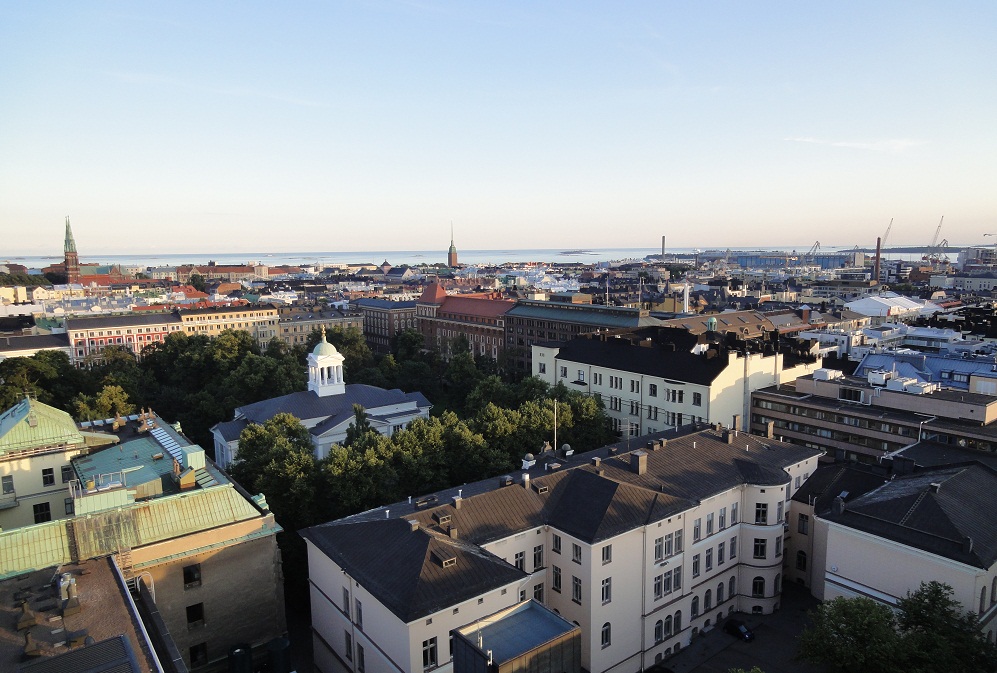
Built in 1931, the legendary Hotelli Torni and its 12th floor offer the best viewpoint in Helsinki where you can see the whole city and even all the way to Estonia on a clear day (or so the legend goes…). Just walk into the lobby and take the elevator to the top floor’s Ateljee Bar. The terrace is a great place to grab an overpriced beer or try a tasty Finnish pear cider. Don’t forget to visit the toilets as they have huge windows – you can see everywhere but people cannot see you as you are so high up.

Linnanmäki amusement park

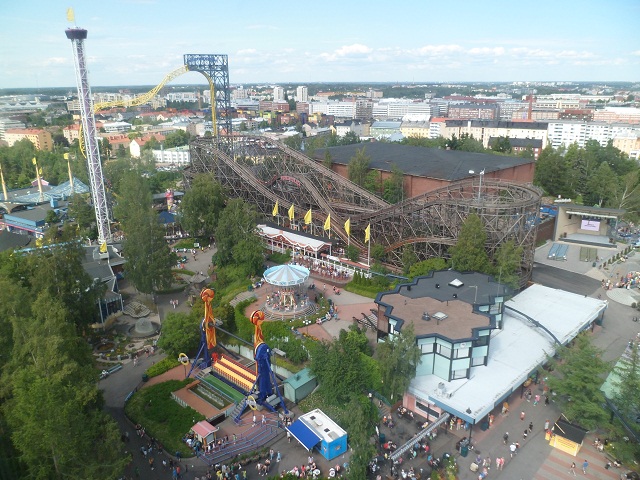
Finland’s oldest amusement park is a fun place to walk around and people-watch. Entry to the area is free, and there’s one free ride. That’s the UFO-looking round sightseeing wheel that takes you up in the air and offers good views over the park and the city. Every other ride costs around 6 euro and a full day-pass is 38 euro. The best deal is to get the three-hour night-time pass at 7 p.m. for 28 euro, and then pay 5 euro to validate it for the following night as well. That way for 33 euro you’ll get two nights of fun and can try all the rides, including the historic wooden rollercoaster built in 1950. It looks tame but is wilder than you’d think! The rollercoaster is also one of the few left in the world where there are “brakemen” standing in the back of each row of wagons.  They make sure the wagons stop accordingly. This is often said to be the most fun summer job in all of in Finland and some brakemen have been doing the job for decades already.

Some other things I recommend for visitors to try in Helsinki:

Hesburger: The Finnish equivalent of McDonald’s with its own secret mayo recipe. I’ve taken countless American visitors there and most have loved it. One even went so far as to say that Hesburger was her saving grace while visiting the Baltic countries (the chain is also present at least in Estonia, Latvia, Russia and Germany). I recommend trying a kerroshampurilainen (the local “Big Mac”) or megahampurilainen (a mega-sized Big Mac). My vegetarian visitors have thoroughly enjoyed the falafel burger. Don’t forget to get a side of the bell pepper, cucumber or chili mayo to go with the fries!

Pick-and-mix candy: Finnish supermarkets and video rental stores like Makuuni and Filmtown have the best selection of candy in the world. I’m not exaggerating – it’s true. Most carry as many as 400 different types of fruity candy, black licorice and chocolate varieties from which to pick and choose your favorites. For the widest selection I recommend visiting any Prisma or Citymarket, but the Makuuni that is near the Rock Church is a good choice too.

Riding the metro: The Helsinki metro system is one of the shortest in the world and thus you simply cannot get lost. It consists of 17 stations and only one line than splits into two in the end. You should ride it to Itis (formerly known as Itäkeskus – Eastern Center), a big shopping mall crowded with people from all ethnicities.

Sparkling wine deals: Finland is notoriously expensive and especially so when it comes to drinking alcohol due to our high tax rates. But for some reason sparkling wine deals are stills plentiful in Helsinki. One of my old favorites is Bar Baker’s and their afternoon Sparking Bar special: you get a glass of sparkly for 1.5 euro for 100 minutes, from 5 p.m. onward (it actually used to be 90-cent glasses for 90 minutes!). The deal is valid from 5-6.40 p.m. Tuesday through Saturday. Just walk upstairs to the bar that’s in the corner of Mannerheiminkatu and Kalevankatu, and you’ll see a line of people standing next to hundreds of glasses of sparkling wine. It’s a sight to behold. Other sparkly deals are to be had in the bars located just up from Bakers on Kalevankatu.

And sure, you probably should also try some reindeer meat, cloud berries, rye bread, Karelian pies, blood sausages, bread cheese and other traditional foods. But for a truly authentic Helsinki experience, don’t skip my list!

Yes, I got robbed in West Africa. But I’m sure you won’t.

I probably should have seen it coming. After all, just three weeks earlier I had received an email from my dad that said:

“Be careful. If you keep on traveling, one of these days you will get robbed.”

I guess to him and most other people it seemed inconceivable that I had been roaming the globe for nearly 12 years without encountering any major problems. To me, it seemed perfectly normal and I expected to be able to continue  at least another dozen years without a hitch. After all, I found the world to generally be a safe place and I had my wits about me.

But sure enough, shortly after my dad’s email I got robbed on a quaint tropical island in Guinea-Bissau, namely the tiny town of Bubaque in the Bijagos Islands. And not just robbed – properly punched in the face.

It happened back in March when a big guy attacked me from behind as I passed him at night on a quiet street. The strange thing was that it had only been about three minutes since I had told my friends that I felt totally safe walking home alone.

Since I didn’t want to give up my purse without a fight, the robber decided to let his fist talk to my mouth a bit. Feeling the impact of the hit on my teeth, I fell back and thus the straps of my purse broke.

Off the guy ran with my dear belongings: my brand new camera, an iPod full of comfort music, spare memory cards and worst of all, my journal with two months of travel memories carefully jotted down for future personal and professional reference. What a sad sight that was, seeing him run down toward the beach and being able to do nothing about it. Though the physical and mental wounds have pretty much healed by now, I still mourn the loss of that diary.

While most of my friends were truly shocked by what happened, some people have not been so understanding.

“C’me on, you were traveling in Africa by yourself as a female. You were clearly asking for trouble!”

Well, yes and no. But mostly no.

Yes only because it probably isn’t the smartest thing to walk alone on an eerie street at 10 p.m. anywhere in the world by yourself. That I admit. But Bubaque seemed like the safest place on earth, so I really didn’t think anything of it.

And no because believe it or not, I found West Africa to be a really safe region to travel around as a solo female. Much safer than most of the 50+ countries I’d visited before. This is for a number of reasons.

The first is that unlike in countries of Latin America, for example, there’s hardly any criminal gang activity in West Africa. In the words of my American friend who lives in Dakar, “Nothing in well-organized in Africa, not even crime.”

Secondly, as this is one of the poorest regions of the world, most people couldn’t own guns even if they wanted to. Their priority is to put food on the table on a daily basis, not to buy ammunition for their imaginary AK-47s.

Thirdly, West Africa just does not have a tradition of robbing or being violent with tourists. I don’t know if it’s because of religion – Islam, the main religion in the area, orders Muslims to take good care of visitors- or if it’s because of some other cultural traits.

African life is generally very community-oriented and criminal behavior isn’t tolerated well. In fact, it’s a surefire way to isolate yourself and to turn into an outcast. Who would want that?

So for the most part I only met people who were incredibly friendly, hospitable and nice. Rather making an enemy out of me the locals wanted to be my friend – inviting me to their homes to stay, teaching me their languages and showing me around town.

Sure, some folks only saw me as a rich foreigner and expected me to shower them with  lavish gifts or help them get visas for Europe, so of course there were some subtle efforts to take advantage of my presence. But not once did anyone try to reach for my wallet in a pick-pocketing effort.

In fact, of all the foreigners that I met over my time in Africa, not a single one had been mugged and only one managed to get his camera nicked from his pocket in the busy border post of Rosso between Mauritania and Senegal.

After my robbery, Titi, the Senegalese manager of my guest house Chez Titi, tried to console me: “You know, you are not the first person this has happened to. Six years ago a French lady also got robbed here.” Geez, SIX years ago?! So what are the odds that this would happen to me? I should play the lottery more often…

In his 20 years of living in the Bijagos Islands, Titi recalled hearing of three robberies before my case. THREE.

Comparing this to the stories of travelers in Latin America where you’ll hardly meet a person who has not been robbed or mugged, the difference was staggering. (Though despite traveling in Latin America for more than eight months in total, I’ve never been robbed there. In Guatemala City I had a close call last year but managed to run away.)

So go on guys and especially gals – travel to West Africa if you are interested in the region and don’t be afraid of going at it alone. At least not from a safety perspective.

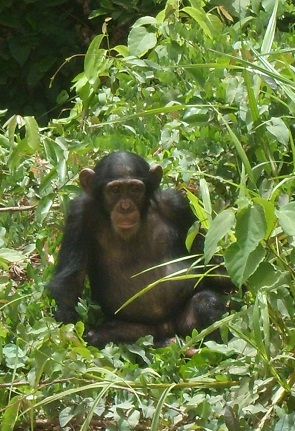
(Surely this cute chimp from The Gambia’s Baboon Island agrees!)

You are more likely to be mugged or robbed at home than to encounter the kind of a rotten apple  that I did. And even I could have probably avoided my uncomfortable fate by asking my friends to walk me back to my guesthouse that night.

So no, I was not asking for trouble by traveling to Africa alone. But since I did find it – who knows, maybe it was just my time to get mugged, in honor of my 12-year globetrotting anniversary. So unless you’ve got the same celebration coming up, I’d say you’re fine!

My Weekend with Senegalese Subsistence Farmers

“So how was Africa??”

Ever since flying out of Senegal in May, not a week has gone by that I haven’t heard this question and soon been retelling my African roadtrip stories to some friend or acquaintance. Nowadays I feel like I’m starting to sound like a broken record since I already know what memories I want to share and what aspects of the experience I’ll focus on. Not that it’s been easy narrowing my four months down to a few short tales, quite the contrary!

Still, one of my favorite stories to tell is how I spent a weekend visiting a tiny rural village in Senegal’s Casamance region – a town that did not have a single toilet, not even of the hole-in-the-ground variety. Instead there was a tree behind which you had to go in times of need, and little piglets roaming around eating the leftovers. Magically it was one of the cleanest toilet arrangements I encountered on the continent.

The most memorable part of the weekend in Bouyouye was going oyster fishing with a few of the village ladies. 

The trip made such an impression on me that I even wrote a story about it for Passblue.com, the same website that recently published my article about the new Cabral museum in Guinea-Bissau. Should you want to learn more about life in rural Senegal, check out this link:

http://passblue.com/2012/07/25/in-rural-senegal-oyster-fishing-is-not-a-hobby/

But even if you are not in the mood for reading the longish piece, don’t miss out on watching this video of a dance party that took place in the village on my last night there. There was really no special occasion for the fiesta nor was it planned at all- one of the guys just started playing his kora (a small guitar-like African instrument) and suddenly the whole village came out to jam. It was quite the scene and this is what went on for hours:

Wow! I was looking at the goings-on with a mix of awe, amazement and a hint of jealousy. If only I had such rhythm in my blood! Unfortunately my efforts to copy these ladies’ styles looked pretty pathetic, so I left myself out of the video. 😛

Altogether if I had to choose one weekend that has had the most profound effect on me this year, this just might be it. While in Bouyouye, I started thinking about what’s really important in this life and questioning our modern world where nobody has time for an impromptu dance party anymore.

Visiting the village made me want to simplify my life even more, and to make time for meaningful human interactions. And it made me less understanding of people who choose to work a 70-hour work week just to make more money to buy more useless material things. I’ve never seen houses more bare than the ones in Bouyouye, but I’ve also never seen happier people. Somehow I feel like there must be a connection… don’t you think?

Have you ever visited this type of a rural village? Did it have as profound of an effect on you as my visit to Bouyouye did on me? 

Addicted to the Beach

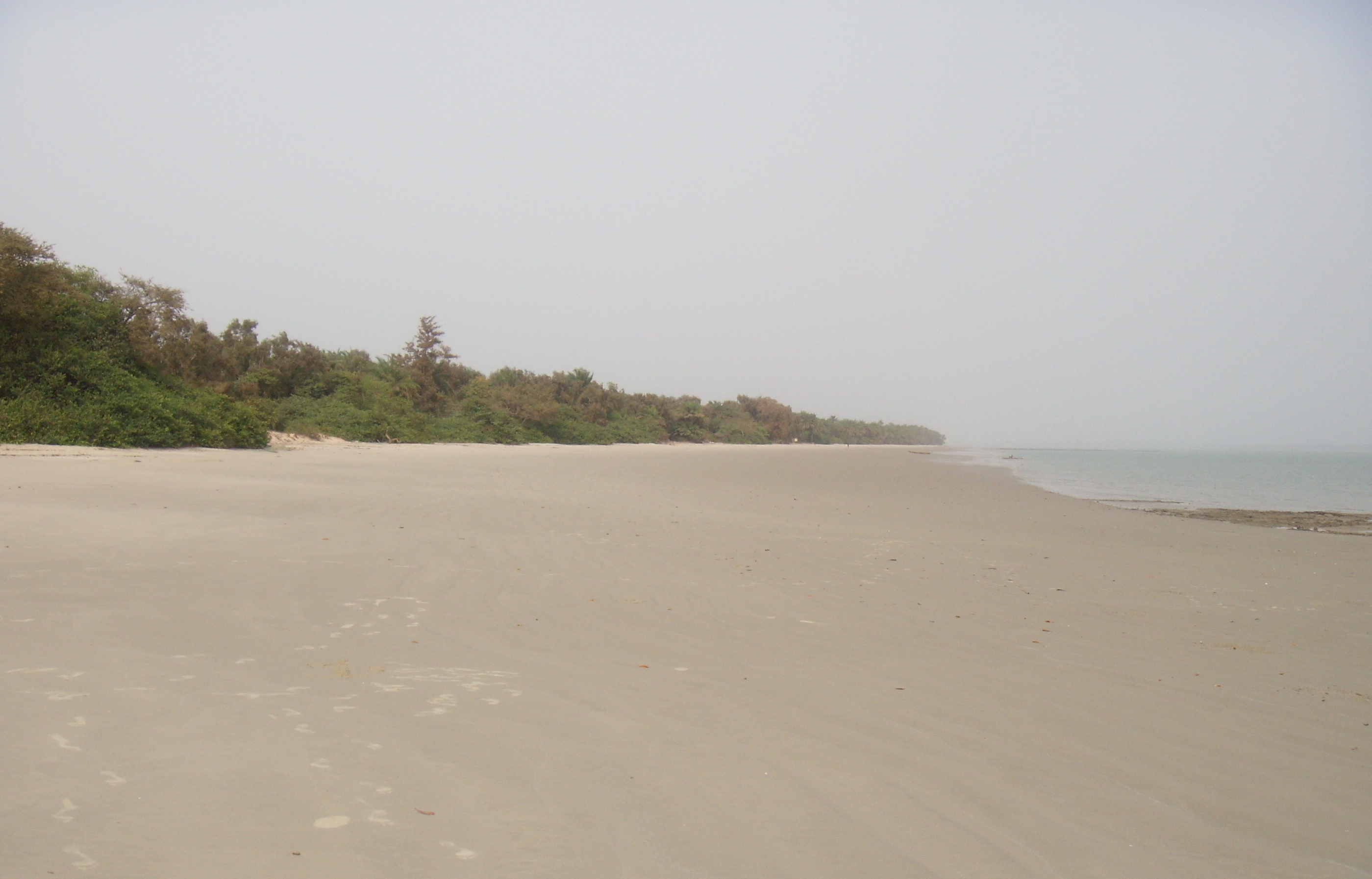
A few months ago I realized something very profound about myself. It happened as I was swimming at a deserted paradise beach in the village of Diembering, in the Casamance region of Senegal. Jumping over big waves and body-surfing on top of the blue water, I was feeling overly happy – like a kid on a sugar high.

That’s when I realized that I have a problem – a beach problem. In fact, it’s a real addiction.

Since 1999, only one year has passed without me spending weeks or months in the vicinity of amazingly beautiful tropical beaches. That year was 2005, when the shore line of New York (which is actually not too shabby!) had to suffice.

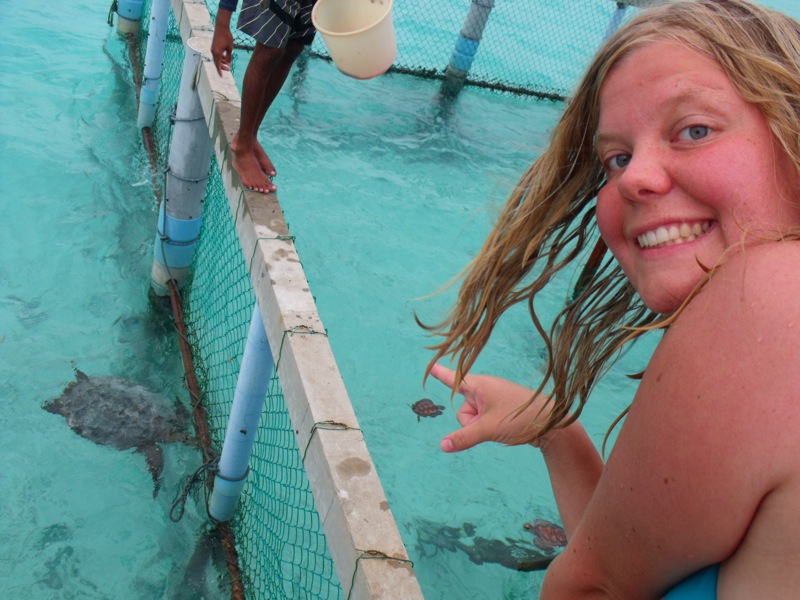
But in 2006 I more than made up for the lost beach time by spending eight months in Australia, the country of pristine waters and white sands and mind-boggling snorkeling opportunities. My favorite memory from that year is swimming alongside a giant turtle at Lady Musgrave Island. 🙂

Since those sunny days Down Under I’ve also discovered playas in Latin America (Colombia! Cuba! Panama!), South and South East Asia, the Caribbean and most recently West Africa. In fact, looking at my travel routes over the years, my paths have almost always followed the coast lines of continents. Coincidence? I think not.

So yeah, I like beaches. A lot. But so do many other people. Why would that be a problem, you may ask…?

Well, not that it’s a problem per se, but my love of beach bumming has definitely had a profound impact on who I am, my career choices and the type of life I lead nowadays. Sometimes I have to wonder what kind of a person I’d be, had I never been enchanted by gently-swaying palm trees and the refreshing taste of fresh coconut water – to the point that being near them is almost an unhealthy obsession. You wouldn’t believe the arrangements and compromises I’ve made in order to stay near the ocean swells.

You see, it was the proximity to Pacific and Atlantic beaches that prompted me to pursue journalism studies in California and Florida, and even got me considering Hawaii for my master’s degree. Eventually New York won, but only barely.

Yes, my addiction is that bad! The thought of living inland has always felt suffocating. Even my occasional inland travels, such as the February yoga retreat in the Sahara, make me feel a bit uneasy. Generally a week is the max I can spend away from the coast without getting jittery.

So in early 2000s I studied for two years at Palomar College near the famous surfer city of San Diego, California. I then transferred schools and two years later got my bachelor’s degree from Flagler College in the tiny coastal town of St. Augustine, Florida. Since Flagler didn’t offer a degree in journalism, I had to settle for studying communication. But at least I was able to spend my days off rollerblading to the beautiful nearby beach! Now that would not have been possible at the Missouri School of Journalism, probably the most famous J-school in the US.

So basically I had to make the choice between a quality education and a quality beach – and I chose the latter. Was it the smartest thing to do career-wise? Maybe not, though the classes at Flagler were definitely good too and I learned a lot. Did I love my life in California and Florida to the fullest? You bet.

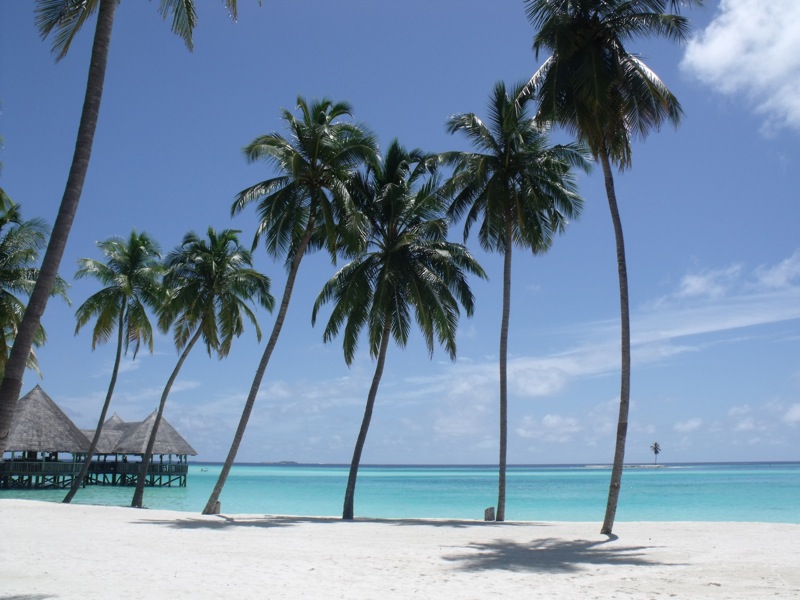
And I won’t lie – it was the images of eye-achingly white stretches of sand and unreal turquoise waters that got me thinking that the Maldives would be an amazing place to teach journalism in 2010 with the help of the Davis Projects for Peace grant. That, and the fact that the country had just gotten freedom of speech in 2008 and the residents were in dire need of media education. Lucky me, my proposal got selected for the grant as one of 11 out of 50 applications.

So for two months I taught workshops in this tropical island nation together with my super talented photographer-videographer friend Mariana Keller. The experience was truly unique: I loved being able to share my knowledge with the local journalists and to train them in our common craft. But yet somehow what I remember the best from those months is the amazing scenery that words cannot describe:

Ahhh. Pure bliss.

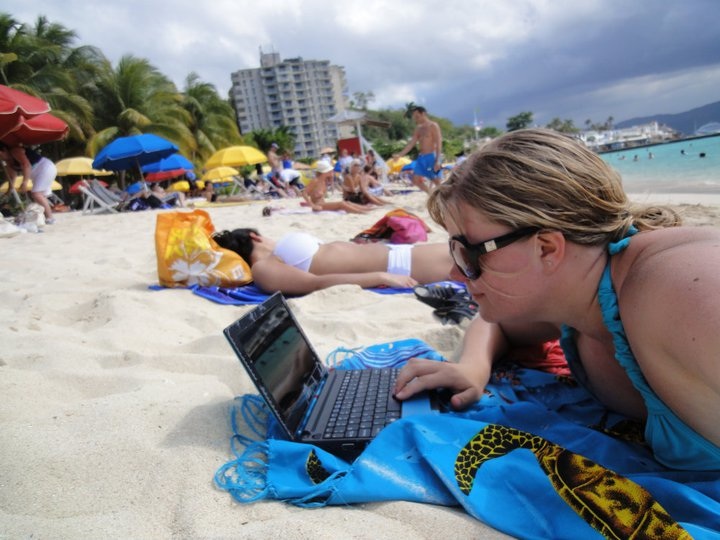
It may come as no surprise that it was this trip to the Maldives that solidified my decision to continue on the freelancing path. Sure, it may not be the best paid job out there or one that is for the faint of heart due to its irregularity. But then what other job would allow me adequate beach time whenever I felt a pressing need to hug a palm tree? If you hear of one, please let me know. Until then, you’ll likely find me typing away on some tropical beach.

So who else wants to confess to being a full-blown beachoholic?? (Yes! There’s even a song for us!) What kinds of sacrifices have you made in your life in order to keep your feet in the sand as often as possible?

The Worst Interview of My Life

As you may have read from the last post, I spent more than three weeks in tiny Guinea-Bissau during my Great West African Tour of 2012 (four months, five countries, two occupied territories – surely the name of my trip is not much of an exaggeration?). 🙂

Besides liking Guinea-Bissau a whole lot, one of the reasons I stayed there for some extra time was that I was reporting on a new museum that is opening up soon. It’ll honor freedom fighter Amilcar Cabral, Africa’s “Che Guevara,” who fought for the independence of his home countries of Guinea-Bissau and Capo Verde in the 1970s. The museum is housed in Cabral’s childhood home in the town of Bafata, which was recently renovated by UNESCO.

I visited the museum and wrote the story for Passblue.com, a website that reports on issues related to the United Nations. The article can be read here and I’d love for all of you to check it out! After all, this piece was very challenging to complete, so please show it some looooove. ❤

Why was it so hard, you may ask… Well, mostly because I don’t speak Portuguese Creole, the official language of Guinea-Bissau. And people there don’t speak much English. So there was a bit of a communication barrier…

But one language I do speak fairly well is Spanish, and many Bissau-Guineans can also communicate in Portuguese. So rather than spending time (and money) looking for a translator, I decided to try to somehow manage on my own.

So I traveled to the town of Bafata, organized some interviews, went over to meet the people of UNESCO, called the governor of Bafata, and dug up some relatives of Cabral and thought everything would just be smooth sailing from there on…

And boy, was I wrong.

It didn’t take me long to figure out that speaking Spanish does not equal understanding Portuguese, no matter how closely related the two languages supposedly are. And understanding Portuguese Creole is next to impossible, as at times it sounds nothing like the language it’s based on.

This was painfully evident during my interview with Amilcar Cabral’s niece, Iva Helena Gomes. I’d ask her a question in Spanish and then she’d give a great, long-winded answer in Portuguese (and/or Portuguese Creole), detailing the complex life story of her uncle… and I’d understand about 1/10 of each sentence, if even.

Every time the friendly lady spoke, it felt like a knife was being twisted in my stomach.

“This is the worst interview I’ve ever done, without a doubt,” I thought to myself as she went on in a language that might as well have been Chinese. I was totally lost, no matter how much I tried to search for familiar words. I have never left less in control of an interview.

In the end I had scribbled down just a few words out of the entire 30-minute interview. It was a sad, sad day. I left Gomes’ house without any spring in my step. Only a bit of panic in my heart. (“How can I write this story without any good quotes??”)

My interview with Bafata Governor Adriano Gomes Ferreira was also not the greatest of all times. Despite knowing Spanish, he would occasionally shift to Portuguese without even realizing it.

It was only during a lunch meeting in the governor’s house that the conversation got a bit easier. I think at that point the guv and his wife finally realized the limits of my Portuguese… Well, better late than never. 🙂

Luckily my other interviews went better, as they were conducted in proper Spanish and one even in English. So at least I learned I feel comfortable reporting in Spanish, but that I already knew from last year when I covered an HIV march in Guatemala City.

In the end the Cabral article turned out fine and I managed to work around my limited quotes. The editor of Passblue.com, Dulcie Leimbach, certainly seemed to like the outcome based on her email.

“I’m impressed you could use your Spanish so well in a Portuguese country. You deserve a Pulitzer!”

Well, thanks Dulcie but I’d hold off on the Pulitzer Prize for now. 😉

And while I did okay, I can’t help but wonder how nice would it have been to be able to choose from 20 great quotes instead of using the only two I understood?

So note to self: Next time I am in a Portuguese-speaking country, I should definitely hire a translator! Spanish is not the same as Portuguese. 😛

You know you have been in Guinea-Bissau for too long when….

Guinea-Bissau, a tiny country on the Atlantic Coast of West Africa, is one of those places where days easily turn to weeks and before you know it, you have practically become a local.

15 signs you have been in Guinea-Bissau for too long:

1) You treat power cuts as a normal part of everyday life. When the all the lights in the house suddenly turn off sometime between 7-11 p.m., you’ll just casually flick the switch of the flashlight that is permanently glued to your hand, and go on with your business like nothing happened. You know perfectly well that the lights will come back in an hour or two, or by the next day for sure. And a power cut is really just a good excuse to go out for a caipirinha!

2) When someone asks you what goes into a caipirinha, you automatically say it’s made of the Guinea-Bissauan spirit of “cana” and is a local classic. (I have personally dubbed Guinea-Bissau as mini-Brazil!). Also, “Baileys” now refers to a mix of fuel-tasting cana, condensed milk and coffee, poured into a 1.5-liter water bottle and drank nicely luke-warm because nobody has a fridge.

3) You think it’s totally normal for freshly-roasted cashew nuts to be sold straight out of the vendor’s hand into yours. While a few thousand germs do switch owners in the process, not much money does: 200 CFA ($0.50) gives you about two palm-fulls of yummy, if slightly sandy, cashews.

(You can also buy fresh cashew fruit and make juice out of it! The nut part comes from the roasted the stub of the fruit.)

4) When someone offers you wine with lunch, you know better than to ask “is it red or white?” Cashew wine only comes in one color: gray. At least the taste varies from fresh and sugary to overly-fermented sourness.

5) In one sentence you’ll use words from Portuguese, Spanish, French, English and Creole. You also feel bad about not speaking fluent Portuguese creole, a language you didn’t even know existed before setting foot into Guinea-Bissau.

6) When the phrase “hit song” automatically refers to the catchy slow tunes of local pop star Americo Gomes:

7) You come to realize the bars you frequent are all located within a two-block radius of each other, meaning that Bissau is not at all the metropolis it seemed to be during the first day.

8) You drink your water out of small plastic bags that you buy in the corner shop. You also know the perfect technique: bite a small hole in the corner and squeeze hard.

9) You think it is totally normal for the airport bar to be a little shack by the road, crowded by people with suitcases, and for the check-in time to be whenever you see the plane arriving on the runway.

10) All the expats you speak with have had malaria or are currently fighting the latest bout of it. Most people seem to think it’s just an extreme case of the feverish flu and don’t even bother with mosquito nets.

11) You no longer wonder how it’s possible that you are in one of the world’s poorest countries, and yet bridges and roads are in great shape, people wear nice clothes and there are fancy mansions sprouting up all over. That’s just how it is. (Surely it has nothing to do with the Latin American drug lords using Guinea-Bissau as a transfer point, right?)

12)  You know better than to buy the 5th ticket to a “Sept Place”, one of the converted Peugeot station wagons that serve as Guinea-Bissau’s only mode of public transportation. While these rickety cars do somehow seat seven people, the fifth person ends up sitting on top of the back wheel, crouching uncomfortably the whole way.

13) You have abandoned all your long sleeves and ankle-length skirts – way too conservative for Guinea-Bissau! Here the look is more along the lines of tank tops and miniskirts, especially in the buzzing nightlife scene of the capital city Bissau.

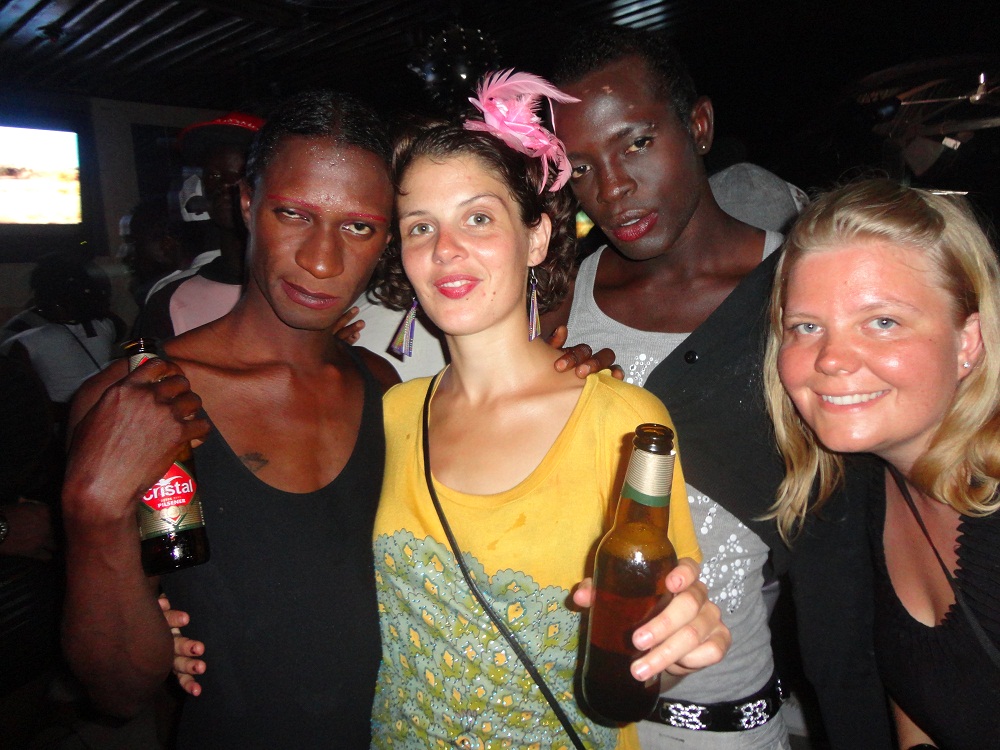
14) You have learned to take a nap before going out dancing at the local hotspots like Bambu or Sabura, as it will surely be another long night. You know that Bissau is called a “24-hour party place” for a good reason – the fun never ends (before 6 a.m. anyway).

15) You have lived through a coup d’etat or two – Guinea-Bissau is famous for not having a single president complete a full term since 1994.


Disclaimer: After spending nearly a month in Guinea-Bissau, I finally left a week before the latest coup – clearly too early! I’ll take that as a sign that I need to go back some day. 🙂

A different kind of a roadtrip

When you say the word roadtrip, most people start visualizing images of never-ending North American highways, identical Burger Kings, and soulless roadside motels.

But the kind of roadtrip I have taken over the past few months through West Africa has been a world apart from its Yankee cousin.

It’s taken me through four countries, one occupied territory, a no-man’s land full of landmines, past countless herds of camels and cows and sheeps, through 30 hours of pure Saharan desert scenery, past more than 20 police checkpoints, into lush tropical greenery and a world of white sand beaches.

I started my trip in Morocco back in January and have over the past three months made my way through Western Sahara, Mauritania, Senegal and Guinea-Bissau on a quiet, leisurely pace.

My modes of transport have consisted of shared Mercedes Benz bush taxis, colorful ramshackle minibuses, converted Chevy “Sept-Place” cars on the verge of a breakdown, a horse-drawn cart, a pirogue (a shaky little fisherman’s boat), big ferries, comfy buses, motorbikes and my own two feet.

At times I’ve been feeling totally out of place, surrounded only by men wearing a boubou, the Mauritanian version of a Moroccan jilaba

Other times I’ve felt right at home.


It’s been quite the adventure, and I’m sorry I haven’t  kept you updated all that well. Every day here in West Africa seems to be so full of adventure that each would warrant its own blog post, but that’s exactly why it’s hard to find the time to sit by the computer on a regular basis. Not a week goes by that I don’t feel a little guilty for not writing more, especially as my head is full of topics I’d love to discuss with you.

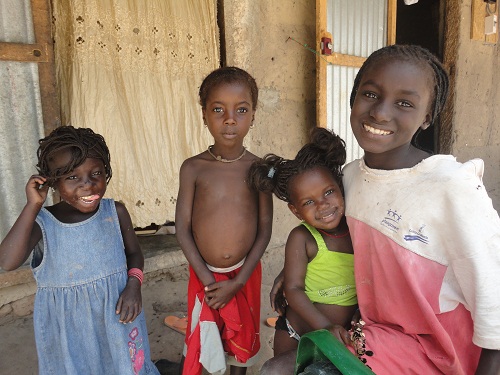
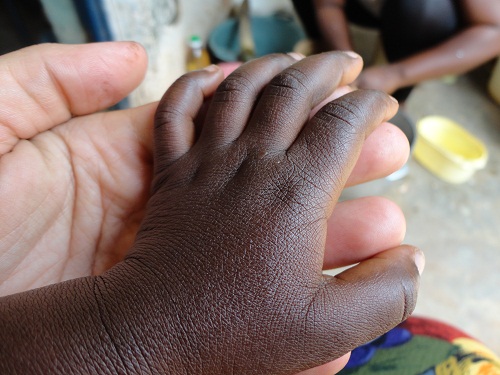
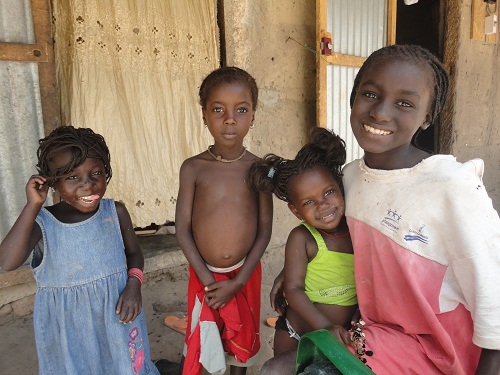
One of them is how Africa surely has the best children in the world. Never in my travels of 50+ countries have I encountered such happy, smiling, positive kids, without fail. I haven’t met a single teenager with attitude problems in West Africa nor a toddler throwing a temper tantrum in the middle of the street.

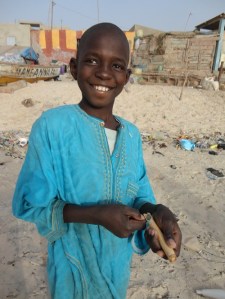
Instead, I’ve met lovely boys like Makhtar, who smiled so radiantly on the beach in St. Louis, Senegal, that I just had to go say hello. I was so happy to learn his name, as it’s also the name of my favorite little boy in Mauritania.

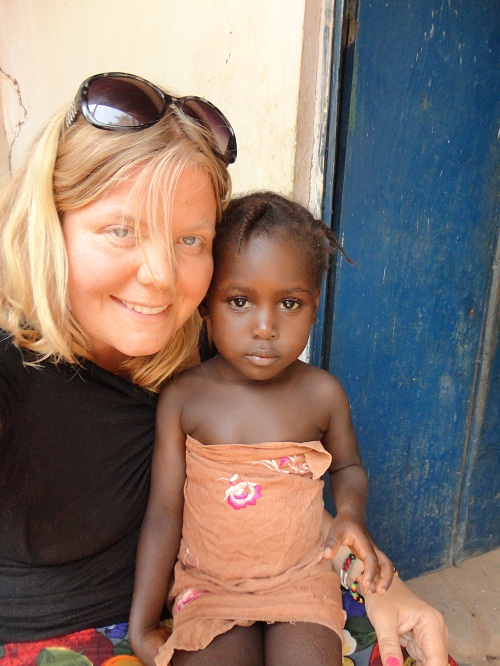
And I’ve met beautiful girls like Jatou, who was my neighbor in Guinea-Bissau’s capital of Bissau for four days.

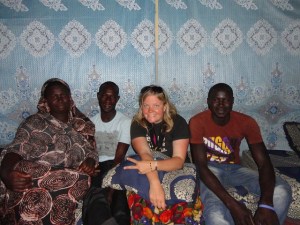
And I met tens of smiling kids in the rural village of Bouyouye in Casamance, Senegal.

How can you not feel overwhelming happiness when you look at these joyous faces? These guys and gals were my neighbors for a week in Mauritania’s capital, Nouakchott.

So again, I’m sorry for not including you in my everyday African life a little better. You certainly would have deserved it. But actually rather than a day-by-day count of my travels, I see this blog as being a place where I can share some particular snippets from the road and some observations I’ve made along the way. At least I say that to make myself feel better about it. 😛

If you have any particular questions about the logistics of traveling long-term, please don’t hesitate to ask. Just because it’s not in the blog, it doesn’t mean it’s a topic I am avoiding as I’d definitely love to help out with any info I may have. It’s just difficult to cover it all – especially while trying to also live in the moment, getting to know new cultures, learning new languages, and working as a professional  journalist all along.

Despite my lack of details, I hope this blog will still inspire some of you to take more unconventional roadtrips in the future. During my trans-Saharan trip I barely ran into any other travelers though there are certainly plenty of wonders to be discovered in this part of the world (and on six other continents!).

So please don’t be afraid to venture beyond those well-known vacation destinations, or to look for paths less beaten in those popular countries. At least for me this is the most rewarding way  to travel,  though it’s certainly not always easy or relaxing. In fact, after three months in West Africa, I’m ready for a vacation!